Releases
Most recent first. Click "Read the essay" to go directly to the essay on site. Click "Full release" to expand the press release text.
-
June 21, 2026
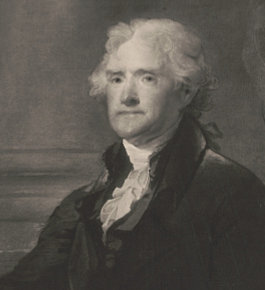 Thomas Jefferson 1743–1826 · Founders & Voices"I Wrote That All Men Are Created Equal. I Owned 607 People."Two hundred and fifty years ago this week, Jefferson is in a rented room in Philadelphia, writing. Right to Redress publishes an essay in his voice that does not apologize — and doesn't let him off the hook either.FOR IMMEDIATE RELEASE · June 21, 2026 · Contact: editor@righttoredress.com"I WROTE THAT ALL MEN ARE CREATED EQUAL. I OWNED 607 PEOPLE."
Two hundred and fifty years ago this week, Jefferson is in a rented room in Philadelphia, writing — a civic platform publishes an essay in his voice that does not apologize — and doesn't let him off the hook eitherINDIANAPOLIS, June 21, 2026 — Two hundred and fifty years ago this week, Thomas Jefferson is in a rented room in Philadelphia, writing the Declaration of Independence. He is 33 years old. He owns 607 people.
Right to Redress, a free nonpartisan civic platform built around the First Amendment right to petition government, today published The Unfinished Sentence — an essay in the voice of Thomas Jefferson addressing the 250th anniversary of the Declaration he wrote and the contradiction he spent his life not resolving.
The essay does not soften the indictment or offer Jefferson's era as mitigation. It makes him use his own most celebrated words against himself.
In 1826, sixteen days before his death on the Fourth of July — the fiftieth anniversary of the Declaration — Jefferson wrote to Roger Weightman declining an invitation to the anniversary celebration. The letter contains some of the most optimistic language of his career: "All eyes are opened, or opening, to the rights of man... the mass of mankind has not been born with saddles on their backs, nor a favored few booted and spurred, ready to ride them legitimately, by the grace of God."
The Right to Redress essay follows that passage with three sentences: "The saddles I denounced were still on the backs of the people I owned. I put them there. I left them there."
The essay closes not with apology or absolution but with a direct demand: "Do not celebrate the Declaration. Argue with it. That is what it was written for."
Every position in the essay is grounded in Jefferson's documented record: the Declaration of Independence, the Weightman letter (1826), his letter to John Holmes on the Missouri Question (1820), and his Notes on the State of Virginia, in which Jefferson wrote: "I tremble for my country when I reflect that God is just; that His justice cannot sleep forever."
"We were deliberate about what this essay is not," said Right to Redress founder Jon Findley. "It's not an apology, and it's not an attack. It's an attempt to imagine what an honest Jefferson — one accountable to his own stated principles — would say about the distance between the Declaration and his conduct. The answer is not comfortable. It shouldn't be."
The Unfinished Sentence is the first in a series of four new Founders & Voices essays releasing this week. George Washington, Benjamin Franklin, and John Adams follow June 21–23, each timed to the approach of the 250th anniversary of the Declaration's signing on July 4.
The essay is available free at righttoredress.com/essays.html.
About Founders & Voices: Founders & Voices presents imaginative essays grounded in the documented words and deeds of historical figures. Every position is traceable to the figure's verified historical record. Standing disclosure on every essay: "These essays are interpretations grounded in the documented words and deeds of real historical figures. They are imaginative, not transcribed."
About Right to Redress: Right to Redress (righttoredress.com) is a free, nonpartisan civic engagement platform built around the First Amendment right to petition government. The platform offers tools to contact all 535 members of Congress, a nonpartisan issues framework, the Founders & Voices essay series, and civic education resources. Launched June 3, 2026.
###
-
June 23, 2026
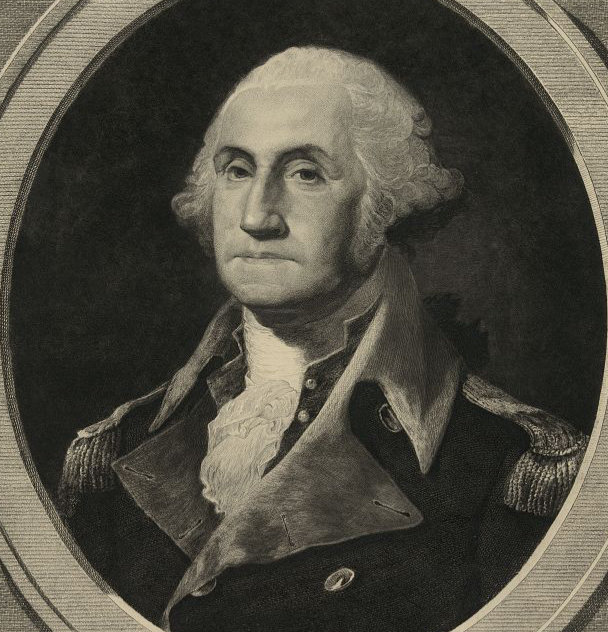 George Washington 1732–1799 · Founders & VoicesGeorge Washington's Farewell Address Warned About This. He Is Given to Understand It Was Largely Ignored.On the 250th anniversary of independence, Right to Redress publishes Washington in his own voice — and the 1796 warnings read like a description of the present.FOR IMMEDIATE RELEASE · June 23, 2026 · Contact: editor@righttoredress.comGEORGE WASHINGTON'S FAREWELL ADDRESS WARNED ABOUT THIS. HE IS GIVEN TO UNDERSTAND IT WAS LARGELY IGNORED.
On the 250th anniversary of independence, a civic platform publishes Washington in his own voice — and the 1796 warnings read like a description of the presentINDIANAPOLIS, June 23, 2026 — In September 1796, George Washington spent the better part of two years composing a Farewell Address warning the young republic about the dangers that would threaten it from within. He warned about faction. He warned about sectionalism, about foreign influence in domestic politics, and about the moment when citizens value institutions only when those institutions produce the outcome they prefer.
The address has been read aloud in the United States Senate every year since 1862.
Right to Redress today published What I Warned You About — an essay in the voice of George Washington addressing the 250th anniversary of American independence by revisiting, point by point, the warnings of the Farewell Address. The essay finds that the address reads less like prophecy than like a description of the present.
Washington — who resigned his military command in 1783 when he could have made himself king, and who left the presidency after two terms when he could have stayed for life — frames his assessment around the precedents of the founding: "The republic I helped build was not built for great men. It was built for ordinary ones — for citizens who would, in the ordinary business of their lives, maintain the habits of self-government."
The essay is available free at righttoredress.com/essays.html.
About Founders & Voices / About Right to Redress: See righttoredress.com/press.html or contact editor@righttoredress.com.
###
-
June 24, 2026
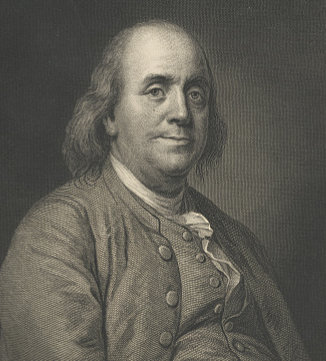 Benjamin Franklin 1706–1790 · Founders & Voices"A Republic, If You Can Keep It." Franklin Has Been Waiting 250 Years to Find Out Whether You Could.The founding generation's institution-builder returns to argue that a republic runs on citizens who show up — not on documents.FOR IMMEDIATE RELEASE · June 24, 2026 · Contact: editor@righttoredress.com"A REPUBLIC, IF YOU CAN KEEP IT." FRANKLIN HAS BEEN WAITING 250 YEARS TO FIND OUT WHETHER YOU COULD.
The founding generation's institution-builder returns to argue that a republic runs on citizens who show up — not on documentsINDIANAPOLIS, June 24, 2026 — In September 1787, Benjamin Franklin left the Constitutional Convention in Philadelphia — carried out on a sedan chair at 81 because his gout made walking the cobblestones impossible — and was asked by a woman outside what kind of government the delegates had produced. "A republic, Madam, if you can keep it," he said. He has been waiting two hundred and fifty years to find out whether you could.
Right to Redress today published What a Republic Requires to Run — an essay in the voice of Benjamin Franklin arguing that the survival of a republic depends not on its founding documents but on the institutions citizens build and the habits they maintain.
Franklin — who founded the first American lending library, the first fire company, the first learned society, and reorganized the colonial postal system into functioning infrastructure — speaks as the founding generation's most practical voice: "A republic does not run on documents. It runs on institutions, and institutions are built by citizens who show up."
The essay is available free at righttoredress.com/essays.html.
About Founders & Voices / About Right to Redress: See righttoredress.com/press.html or contact editor@righttoredress.com.
###
-
June 25, 2026
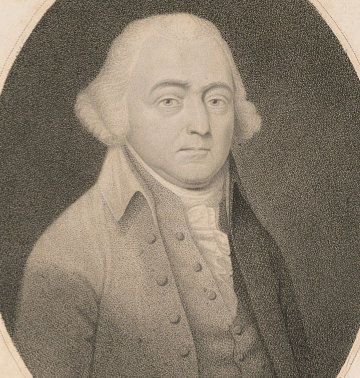 John Adams 1735–1826 · Founders & VoicesJohn Adams Read the History of Every Republic That Ever Failed. He Found a Pattern.The founding generation's most rigorous constitutionalist returns for the 250th to ask whether the machinery he built to prevent democratic failure has held.FOR IMMEDIATE RELEASE · June 25, 2026 · Contact: editor@righttoredress.comJOHN ADAMS READ THE HISTORY OF EVERY REPUBLIC THAT EVER FAILED. HE FOUND A PATTERN.
The founding generation's most rigorous constitutionalist returns for the 250th to ask whether the machinery he built to prevent democratic failure has heldINDIANAPOLIS, June 25, 2026 — John Adams spent his career reading Athens, Rome, the Italian city-states, the Dutch Republic, and the English Commonwealth — specifically to understand why free governments fail. He found a pattern consistent enough to amount to a law: free governments do not fall to tyrants from outside. They fall to themselves.
Right to Redress today published A Government of Laws, Not of Men — an essay in the voice of John Adams assessing whether the constitutional machinery he designed to prevent democratic failure has held.
Adams — who drafted the Massachusetts Constitution of 1780 (the oldest written constitution still in operation in the world), kept the United States out of a war with France knowing it would cost him the presidency, and defended the British soldiers charged in the Boston Massacre because he believed the rule of law required it — offers an assessment grounded in his reading of human nature: "The machinery of checks and balances was not designed for a people in perfect civic health. It was designed for a people exactly like you — ambitious, contentious, convinced of their own righteousness, and prone to faction."
The essay closes: "It is not too late. But it is later than you think."
The essay is available free at righttoredress.com/essays.html.
About Founders & Voices / About Right to Redress: See righttoredress.com/press.html or contact editor@righttoredress.com.
###